
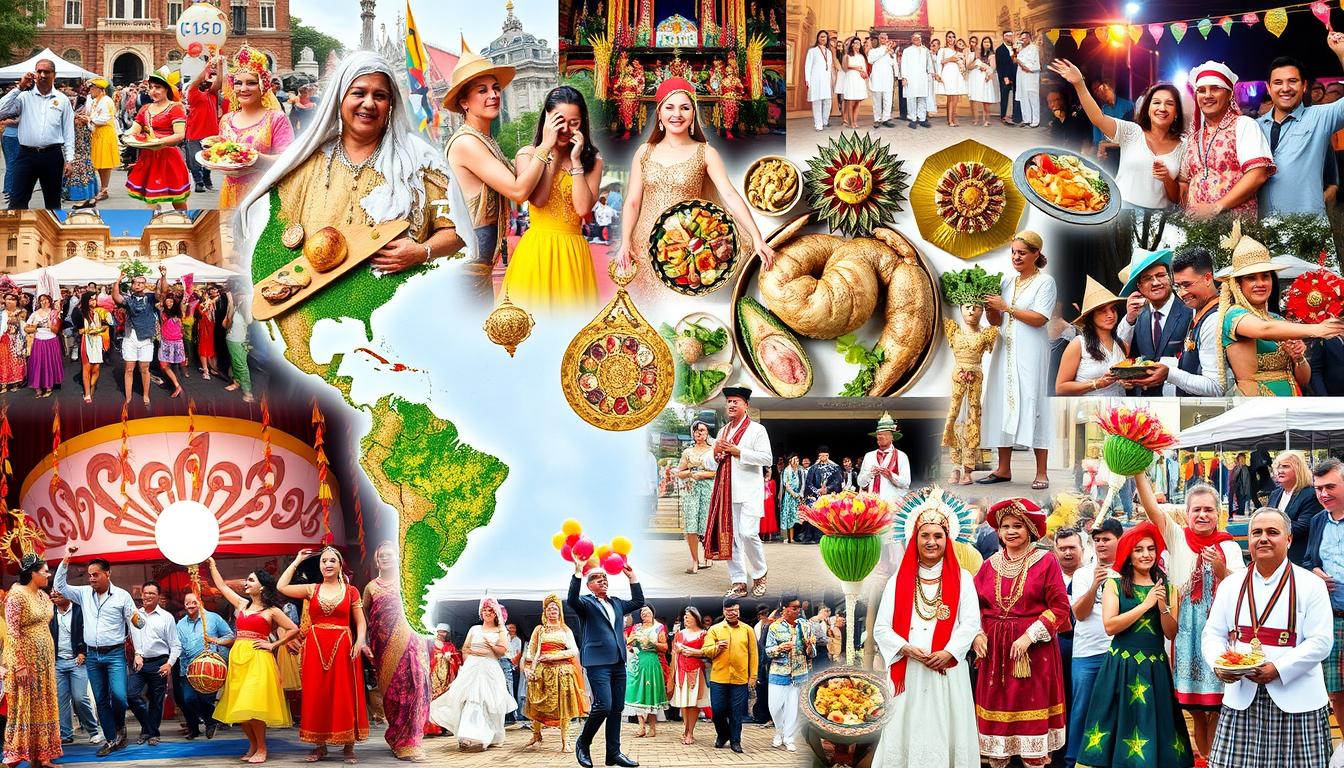
Cultures worldwide are filled with exciting traditions that have lasted for ages. From India’s lively festivals to Spain’s La Tomatina, our world is a mix of different customs. Each one is a special part of our global heritage.
This article takes you on a journey to discover these global customs. You’ll learn about the international traditions that make our world so diverse.
In Japan, there are touching gift-giving rituals. In Scandinavia, the midsummer celebrations are unforgettable. This exploration of world heritage shows us the unique and fun traditions that connect us all.
1. Celebrating the Colorful Festivals of India
India’s festivals are a colorful display of its rich culture. The Holi celebration and the Diwali lights show the country’s diverse traditions. These religious celebrations are a feast for the senses and show India’s strong spirit.
The Holi festival, known as the “Festival of Colors,” is a joyous time. People throw colorful powders and water, creating a lively atmosphere. It truly captures the spirit of Indian culture.
Diwali, the “Festival of Lights,” is a time for spiritual reflection. Families light diyas, exchange gifts, and enjoy delicious food. The lights and firecrackers create a magical scene.
“India’s festivals are not just a feast for the senses, but a tapestry woven with the threads of tradition, faith, and community.”
These festivals are more than celebrations; they celebrate Indian culture. They remind us of India’s strong spirit and people’s resilience. Together, they honor their heritage and create unforgettable memories.
2. The Playful Nature of La Tomatina in Spain
Spain is famous for its lively festivals, and La Tomatina in Buñol is one of the most fun. It’s a huge food fight where people throw tomatoes at each other. This event shows Spain’s love for fun and festive spirit.
Every August’s last Wednesday, Buñol turns into a colorful carnival. Thousands of people gather in the main square, ready to throw tomatoes. The square echoes with laughter and the sound of tomatoes splashing everywhere.

The festival started in the late 1940s with a food fight during a celebration. It has grown bigger and more popular over time. Now, people from all over the world come to join in the tomato throwing and enjoy the Spanish festivals in Buñol.
“La Tomatina is a truly unique and unforgettable experience. There’s nothing quite like being part of a massive, joyful crowd, covered in the vibrant red of crushed tomatoes. It’s a celebration of life, laughter, and the pure, unadulterated fun that makes Spain so special.”
3. Unique Marriage Traditions Across Cultures
Weddings are a time-honored tradition that reflect the rich tapestry of cultural rituals and matrimonial customs worldwide. From the elaborate wedding customs of India to the symbolic tea ceremonies in Chinese culture, these cultural rituals offer a captivating glimpse into the diverse societal values and practices that define the matrimonial traditions of various communities.
In traditional Hindu weddings, the bride often adorns a vibrant red sari, symbolizing fertility and prosperity. The groom may arrive on a decorated horse or elephant, emphasizing the grandeur of the occasion. Similarly, in China, the tea ceremony is a sacred rite where the newlyweds demonstrate their respect and gratitude to their elders, solidifying their bond with the family.
“Weddings are not just a celebration of love; they are a tapestry of cultural heritage, woven with the threads of tradition and the vibrant hues of community.”
Across the globe, these cultural rituals and matrimonial traditions serve as a powerful reminder of the diversity that enriches the human experience. By embracing and understanding these unique wedding customs, we gain a deeper appreciation for the intricate tapestry of global cultures.
4. The Art of Gift Giving in Japan
In Japan, giving gifts is a complex social custom. It shows the country’s focus on politeness, respect, and detail. This tradition, known as Japanese etiquette, is key to the nation’s culture. It shapes how people interact and keep relationships strong.
The heart of this custom is omiyage. It’s about the thoughtful souvenirs people bring back. These gifts are for friends, family, and colleagues. Choosing and presenting them shows you care about the person.

The art of gift-wrapping in Japan is highly valued. It involves detailed folding and beautiful paper, ribbons, and more. This shows respect and appreciation for the person receiving the gift. It highlights Japan’s focus on social customs and keeping relationships harmonious.
“The way you wrap a gift in Japan is a reflection of the care and thoughtfulness you’ve put into it.”
Learning about Japanese etiquette in gift-giving helps build stronger connections. It shows the country’s lasting cultural values. It’s about making interactions meaningful and thoughtful.
5. Quirky Festivals You Didn’t Know Existed
Around the world, many unique and offbeat cultural events exist. They celebrate the unusual. These quirky festivals show the diverse and sometimes eccentric side of human traditions.
In England, the Cooper’s Hill Cheese-Rolling and Wake is a centuries-old event. It involves daring participants chasing a large round of cheese down a steep hill. This offbeat tradition attracts crowds eager to see the thrilling and often comical tumbles of the cheese chasers.
In Finland, the Wife Carrying World Championships test couples’ strength and agility. They navigate an obstacle course while the male partner carries the female. This unique cultural event is a beloved tradition that celebrates the playful and unconventional side of human nature.
“These quirky festivals showcase the diverse and sometimes eccentric nature of human celebrations.”
From cheese rolling to wife carrying, these unusual celebrations and offbeat traditions offer a glimpse into human culture. They remind us that even the most unique cultural events can bring joy, laughter, and a sense of community.
6. Midsummer Celebrations in Scandinavia
When the sun sets, the Nordic countries light up with midsummer celebrations. These events are filled with Nordic traditions and pagan customs. They celebrate the summer solstice, the longest day of the year.
Bonfires light up the night, making everything warm and cozy. People wear flower crowns to show off nature’s beauty. The smell of fresh grass and laughter fill the air as everyone dances around the maypole.
“Midsummer is a time to celebrate the life-giving force of the sun and the beauty of the natural world. It’s a magical time when the boundary between the human and spirit realms is said to be thinner, allowing us to connect with our folklore and pagan roots.”
The night goes on with music, food, and stories. People enjoy the long daylight, some even staying up all night. They watch as the sun barely touches the horizon.

These midsummer celebrations are more than just a tradition. They help people connect with nature and their spirituality. They remind us of the strong Nordic heritage and the need to respect the earth’s cycles.
7. Unique Food Customs in Different Countries
Across the globe, different dining etiquette and culinary traditions have developed. These show the rich cultures and histories of various places. From using chopsticks in East Asia to eating with hands in Africa and the Middle East, these customs are interesting. They reveal the social and religious influences on dining around the world.
In India, people traditionally use their right hand to eat. This is because the left hand is seen as unclean. This custom comes from ancient beliefs and is still followed today, even in formal meals. On the other hand, in some parts of Africa, eating from a shared plate is a tradition. It brings people together and strengthens community bonds.
“Eating is not merely a material pleasure. Eating well gives a spectacular joy to life and contributes immensely to goodwill and happy companionship.” – Eliza Acton
In East Asia, using chopsticks shows respect for food’s flavors and textures. Learning to use chopsticks well is seen as a sign of refinement. It adds to the joy of dining.
These unique food customs shape how we eat and offer a peek into global culinary traditions. By embracing and understanding these practices, we can appreciate the cultural diversity of our world. This makes our world vibrant and fascinating.
8. Celebrating the New Year: Varied Traditions
As the world says goodbye to the old year and hello to the new, different cultures celebrate in their own ways. In Sydney, Australia, people watch the midnight fireworks. In Spain, they eat grapes at midnight. These cultural celebrations show the variety of holiday customs that welcome the new year.
In Japan, people ring temple bells 108 times to cleanse their sins. In Ecuador, they wear colorful masks and burn scarecrows to leave the past behind. The Lunar New Year in China and other East Asian countries includes parades, firecrackers, and money-filled red envelopes for good luck.
“The new year stands before us, like a chapter in a book, waiting to be written. We can help write that story by setting goals.”
Everyone hopes for a better year, no matter their traditions. These celebrations remind us of our shared dreams for the future. They show how the world comes together to celebrate the New Year.

9. The Importance of Family in Different Cultures
Family values and relationships are key in shaping cultural norms worldwide. Some cultures focus on extended family, while others value the nuclear family. This shows the diversity in intergenerational relationships and cultural norms that make our world rich.
In many African and Asian cultures, the extended family is central. Grandparents, parents, and children often live together. Each person has a special role, creating a strong sense of community and support.
“The family is the basic unit of society. It is where we learn the values that guide our lives.”
On the other hand, Western societies, like the United States, often focus on the nuclear family. This structure values individual freedom and self-reliance. Yet, it also cherishes family values like love, support, and shared traditions.
Despite cultural differences, the family values that unite us are universal. Families are the foundation for cultural norms and traditions passed down through generations.
10. Fun Superstitions That Span the Globe
Superstitions give us a peek into the beliefs and stories of cultures worldwide. They show how different societies view luck and misfortune. For example, in the West, black cats are often avoided, while in East Asia, the number 4 is feared.
In the U.S., people often avoid walking under ladders or breaking mirrors. They believe these actions can bring bad luck. In Japan, the number 4 is linked to death, so it’s skipped in building numbers and hospital rooms.
Diverse cultures have their own lucky charms and rituals. In India, Diwali celebrates light over darkness with clay lamps. These lamps are thought to keep evil away. In Europe, horseshoes on doors are believed to bring good luck and protection.