Starting a love for science is a journey that opens our eyes to the world. We, as educators, parents, and mentors, can help spark a lifelong love for science. By encouraging curiosity, hands-on learning, and looking up to inspiring figures, we can help the next generation become scientists, innovators, and thinkers.
Science isn’t just about facts and formulas; it’s a living, changing field that uncovers the universe’s secrets. By teaching a love for science, we help learners join the quest for knowledge. They’ll learn to ask questions, experiment, and see the world through science.
This article will show how to make science exciting and easy to learn, both in school and outside. We aim to give you the tools and methods to raise a generation of science lovers. They’ll be ready to face the future’s challenges.
Nurturing Curiosity: The Bedrock of Scientific Exploration
At the core of scientific discovery is a deep curiosity to understand our world. It’s key to making science exciting for learners. By sparking their curiosity and wonder, we light the flame for a lifelong love of learning.
Encouraging Inquisitive Minds
Creating a space that values open questions is vital for curiosity. Encourage learners to ask big questions and seek out new knowledge. Offer chances for them to share ideas and link science to their daily lives. This builds critical thinking and a love for science.
Fostering a Sense of Wonder
Science is full of mysteries waiting to be solved. By making learners feel wonder, we push them to dive deeper into science. Use hands-on activities, nature walks, and interactive shows to spark their curiosity and creativity.
By growing curiosity and a love for asking questions, we help learners join the quest for knowledge. This sets them up to make new discoveries and shape the future of science.
Hands-on Learning: Bringing Science to Life
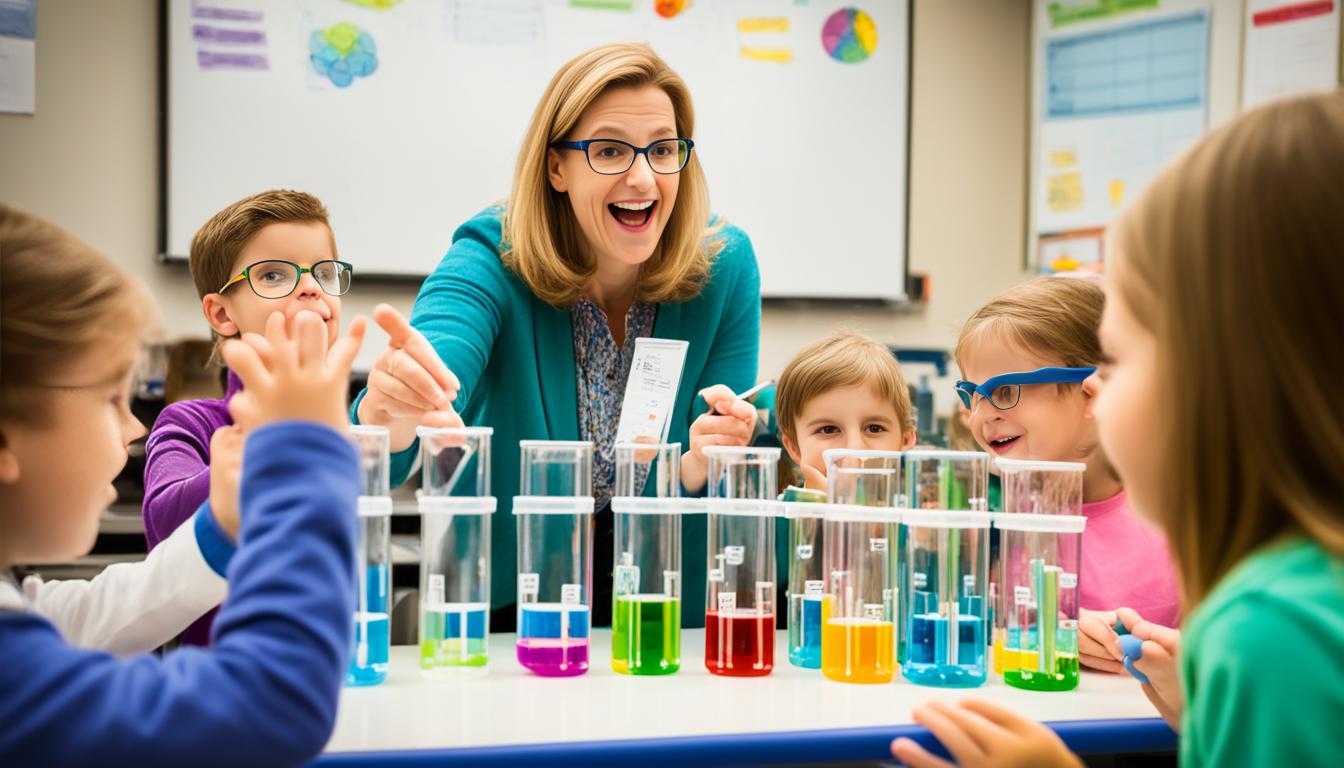
Hands-on science activities spark curiosity and make learning fun. They help students see the world in a new way. By doing science themselves, students get a deeper understanding of important concepts.
Engaging Experiments and Activities
Activities like building circuits and exploring magnets let students touch and see science. These hands-on experiences make the scientific method exciting. Students learn to appreciate discovery and the joy of learning.
They get to design catapults, grow crystals, and learn about light. These activities make science come alive in a way books can’t.
DIY science projects show that science is fun and within reach. Students feel empowered when they can build and experiment on their own. This approach builds a lifelong interest in science and problem-solving.
Science in Everyday Life: Making Connections
Science isn’t just for labs or classrooms; it’s everywhere in our daily lives. By showing learners how science is part of their daily routines, we help them value its importance. This makes them see science as vital and interesting.
From the way a bouncing ball moves to the mix of ingredients in cooking, science is always working. By getting learners to notice and study science in everyday life, we encourage them to apply it in real situations. This helps them connect science to their daily experiences.
Simple tasks like playing with light and shadows, learning about the water cycle, or understanding the seasons can reveal science’s role in our lives. These activities show learners how scientific ideas relate to their everyday world. This sparks their curiosity and deepens their knowledge of the world.
Seeing science in our daily routines is a great way to build a lasting love for the subject. When learners see how science affects their lives, they’re more likely to take an active interest in it.
Inspiring Role Models: Celebrating Scientific Trailblazers
Showing the next generation of scientists the achievements of those before us is key. We highlight the stories of influential scientists, especially from underrepresented groups and women. This helps learners see themselves in STEM fields.
Highlighting Diverse Voices in Science
Marie Curie, the first woman to win a Nobel Prize, and Katherine Johnson, Dorothy Vaughan, and Mary Jackson, who helped NASA, are just a few examples. Their stories show us that science has many trailblazers who broke through barriers. Sharing these stories inspires a new generation and celebrates STEM diversity.

We also need to recognize the many unsung heroes in science. People like indigenous researchers and immigrant scientists who bring new ideas. Their stories show that science has no limits.
Cultivating a Growth Mindset: Embracing Failures as Learning Opportunities
In the world of science, facing failures and challenges is a normal part of the journey. But, it’s how we handle these setbacks that matters. Having a growth mindset means believing we can get better with effort and a readiness to learn from our mistakes. This mindset is key for building scientific resilience and seeing failures as chances to grow, not obstacles.
Encouraging students to embrace challenges and see mistakes as part of learning helps create a culture of curiosity and innovation. This way, young scientists gain a deeper understanding of the scientific method. They also learn the important skills of learning from mistakes and keeping going when things get tough.
Teaching a growth mindset in science education is vital for the next generation of leaders. When students see failures as opportunities to learn and get better, they’re more likely to take risks, try new things, and explore the unknown. This mindset builds scientific resilience and keeps them passionate about learning and discovery throughout their lives.
Science: A Path to Understanding the World
Science takes us on a deep and exciting journey to understand our world. It helps us uncover the mysteries from tiny particles to huge stars. This journey helps us make sense of the universe and our role in it.
Exploring Scientific Concepts
Science is always growing, bringing us new knowledge and changing our views. By studying fields like physics, chemistry, biology, and astronomy, we learn about the world’s basics. This exploration helps us and leads to big advances in technology, medicine, and more.
Developing Critical Thinking Skills
Science isn’t just about learning facts; it’s about thinking deeply. It teaches us to ask questions, make guesses, and test them. This way, we learn to solve problems, think logically, and make decisions based on facts. These skills help us tackle tough challenges and make smart choices in life.
Making Science Fun: Incorporating Play and Creativity
Learning science is more than just reading books and listening to lectures. We can make it exciting by adding playful learning and creative ideas. Science is all about discovering new things. What better way to start than with fun, hands-on activities?
Playing is key to making science enjoyable. Using interactive experiments and games makes learning an adventure. Think about building a model volcano or designing a catapult. These activities teach science and make us feel amazed and curious.
Creativity makes science really stand out. Encourage students to think outside the box and be inventive. They can make a sustainable invention or art inspired by nature. This brings a deeper understanding and appreciation for science.
By mixing play with creativity, we can make science lessons fun and engaging. This approach inspires curiosity and a lifelong interest in science. The best learning happens when we’re having fun and exploring the world with wonder and excitement.
Building a Love for Science through Literature and Media
Science-themed books and films can spark a deep interest in science. They mix stories with scientific ideas, making learning fun. This approach can make science exciting and easy to understand.
From science fiction to real-life stories of scientists, these stories bring science to life. They let us see how science affects our world. This makes learning about science more engaging and meaningful.
Captivating Science-Themed Books and Films
Great science books and films take us on journeys of discovery. They make us love science more. By making learning fun, they connect school with real-life science.
These stories can take us to different worlds, from time travel to the cosmos. They make us curious about science. This can lead to a lifelong love for learning about the world.

Adding science books and films to school and personal reading can deepen our love for science. It teaches us about the scientific method and critical thinking. It encourages us to explore the world’s mysteries.
Field Trips and Explorations: Bringing Science to Life Beyond the Classroom
Science learning isn’t just in the classroom. Field trips and hands-on activities can spark a love for science in students. By exploring the real world, students see science come alive in a fun way.
Science museums and centers offer interactive exhibits and amazing demonstrations. These places let students try out experiments and learn by doing. It makes science more interesting and encourages them to keep exploring.
Trips to nature centers, zoos, or scientific businesses show how science is used in the real world. These experiences help students connect what they learn in class to what they see happening around them. It shows how science is important in our daily lives.
Using science museums and centers, teachers can make science exciting for students. These trips make learning fun and inspire students to think scientifically. They help prepare the next generation of scientists and explorers.
Encouraging STEM Careers: Inspiring Future Scientists
It’s vital to inspire the next generation of scientists, engineers, and innovators. We need to show them the many paths in STEM fields. By sharing stories of diverse STEM careers and role models, we can make STEM exciting for young learners.
Highlighting Diverse Career Paths
STEM fields offer many exciting and rewarding careers. From groundbreaking research to creating new products, there’s a lot to explore. By showing learners these options, we help them see themselves in these roles.
There are careers in biotechnology, renewable energy, coding, and aerospace engineering, among others. These fields are full of chances for those eager to make a difference.
Sharing the stories of STEM role models, especially those from diverse backgrounds, inspires learners. It shows that STEM careers are open to everyone. By celebrating these successes, we motivate students to become STEM leaders. They can drive innovation and make the world a better place.
Fostering Collaboration and Teamwork in Scientific Endeavors
In the world of science, working together is key to big discoveries and progress. Collaborative science learning builds a community and gets learners ready for real scientific work. By doing group projects in science, students learn important skills like talking, solving problems, and teamwork in STEM.
Working together on collaborative science learning lets students look at complex problems from different angles. They share their knowledge, ideas, and challenge each other, leading to new solutions. This kind of group projects in science improves their grasp of science and boosts their science communication skills.
Collaboration also teaches vital skills wanted in science. Students learn how to work in teams, solve conflicts, communicate well, and give and get helpful feedback. These skills are key as they move into their scientific careers.
Creating a culture of teamwork in science helps students and prepares them for the field. By using collaborative science learning and group projects in science, teachers can motivate the next generation of scientists to work together, communicate well, and advance science.
Celebrating Scientific Achievements and Breakthroughs
Science has changed our world with groundbreaking discoveries. Marie Curie’s work on radioactivity led to nuclear medicine. Albert Einstein’s theories changed how we see space and time.
These scientists have made a huge impact. Stephen Hawking and Neil deGrasse Tyson have inspired many with their work. They have shown us the wonders of science.
We honor these pioneers to inspire others. Their work sparks curiosity in those who want to make new discoveries. Let’s keep exploring and remember the giants who came before us.