
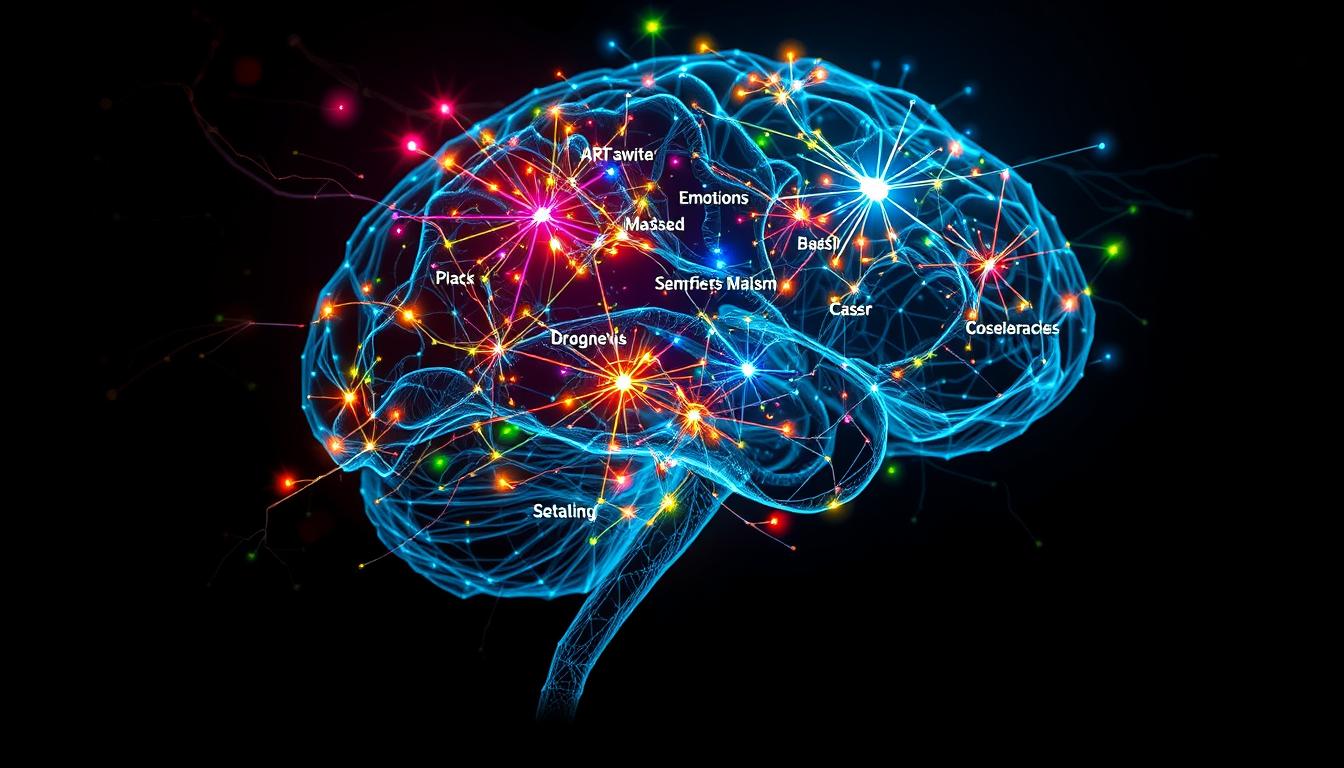
Brain scanning technologies have changed how we understand human emotions and behavior. These tools let researchers explore the brain’s role in our thoughts and actions. They use advanced imaging to see how our brain works.
Cognitive neuroscience is key in this field. It studies the brain and how we think. By using brain imaging, scientists can see how different parts of the brain work together. This helps them understand our emotions and actions better.
Technologies like fMRI and EEG are at the heart of this research. They show us how the brain works. By studying these signals, scientists learn more about our emotions and how we make decisions.
This article explores the world of brain scans and their impact. We’ll see how they’ve changed our view of the brain and behavior. Join us to discover the secrets neuroscience has uncovered about us.
Understanding Neuroscience: The Brain and Its Functions
Neuroscience is the study of the nervous system. It gives us a deep look into how the human brain works. It focuses on the brain’s structure and the complex networks that help us think and learn.
The brain is an amazing organ with different parts for different tasks. The outer layer, the cerebral cortex, helps us make decisions and solve problems. Inside, the limbic system controls our emotions, and the cerebellum helps us move and balance.
“The brain is the most complex structure in the known universe. It is the source of all the qualities that define our humanity – our thoughts, our emotions, our memories, our creativity.”
These brain parts are connected in complex ways. This lets them talk to each other easily. Scientists study these connections to understand how we see, remember, and experience the world.
Learning about the brain helps us understand how we think and feel. This knowledge helps us in many areas, like psychology and medicine. It also helps us improve technology to make life better for everyone.
The Basics of Brain Scanning Techniques
Neuroscience has made big strides, leading to new ways to see inside the brain. Techniques like fMRI and EEG give us a peek into how our brains work. They help us understand brain activity and structure.
fMRI shows us which parts of the brain are active by looking at blood flow. EEG records the brain’s electrical signals, giving us a detailed look at how neurons fire.
“Brain imaging methods like fMRI and EEG have revolutionized our understanding of the human brain, enabling us to explore its complex functions in ways that were once impossible.”
PET scans and MEG are also key tools in brain research. PET scans track brain metabolism, and MEG picks up on tiny magnetic fields from neurons.

Each brain imaging method has its own strengths and weaknesses. Knowing about these tools helps us learn more about the brain. It opens up new ways to understand the mind-body connection.
How Emotions Are Processed in the Brain
Neuroscience has uncovered how emotions work in our minds. The limbic system, deep in the brain, is key to processing emotions. At its core is the amygdala, a small almond-shaped part that deals with emotional signals.
Brain scans show how different emotions work and how we control them. When we feel fear or joy, the amygdala starts a chain of physical reactions. Other brain parts, like the prefrontal cortex, help manage these feelings and guide our choices.
“The amygdala is the emotional center of the brain, responsible for processing and interpreting emotional stimuli, while the prefrontal cortex helps regulate those emotional responses.”
Studying the limbic system and emotional processing gives us insights into human behavior. This knowledge helps in creating better treatments for emotional issues. It also helps us understand and deal with life’s complexities better.
Exploring the limbic system and amygdala is exciting. Neuroscience is on the verge of revealing how we control our emotions and thoughts. This could change how we live and interact with each other.
The Impact of Brain Chemistry on Behavior
Our behavior is closely tied to the balance of neurotransmitters in our brain. Messengers like dopamine and serotonin control our mood and well-being. When these chemicals are out of balance, it affects how we act and make decisions.
Dopamine is known as the “feel-good” neurotransmitter. It’s linked to pleasure, motivation, and seeking rewards. An imbalance can cause addiction, Parkinson’s disease, and schizophrenia. Serotonin, which helps regulate mood, is often low in people with depression and anxiety.
“The brain is a complex and fascinating organ that holds the key to understanding human behavior. By unraveling the mysteries of neurotransmitters, we can gain valuable insights into the drivers of our actions and emotions.”
Keeping neurotransmitters in balance is key for a healthy brain. Stress, diet, and lifestyle can change these levels. This can lead to different behaviors and mental health issues. Knowing how brain chemistry affects behavior helps us find ways to improve mental health and change behaviors for the better.

Exploring how neurotransmitters and behavior interact opens up new ways for personal growth and therapy. It also helps us appreciate the complexity of the human mind.
The Connection Between Brain Activity and Mental States
The human brain is complex and fascinating. Neuroscience has given us many insights into our mental states. Advanced brain scanning techniques have shown us how different states, like consciousness and meditation, work in the brain.
Brain imaging studies have found interesting links between brain activity and altered states. For example, meditation and psychedelic drug use show unique brain patterns. These patterns match the experiences people have during these states. This helps us understand the biological side of these experiences.
“The brain is wider than the sky.” – Emily Dickinson
Studies on meditation have also given us valuable information. Brain scans show that regular meditation boosts certain brain areas. These areas are linked to attention, emotions, and self-awareness. This suggests that mindfulness can change our brain and improve our mental health.
As we learn more about the brain and mind, we see many ways neuroscience can help us. It can improve mental health and help us grow personally. By studying the brain, we can better understand our minds and explore new ways of being.
Understanding Depression Through Neuroscience
Recently, neuroscience has made big steps in understanding major depressive disorder. Tools like functional magnetic resonance imaging (fMRI) and positron emission tomography (PET) have given us key insights. They show how the brain works differently in people with depression.
Brain imaging has shown that people with depression have different brain activity and structure. Certain areas, like the prefrontal cortex and amygdala, are especially important. They help control mood and emotions.
Neuroplasticity, or the brain’s ability to change, is also crucial. In depression, this ability can be disrupted. This leads to changes in brain connections and function. These changes make depression hard to shake off.
“Understanding the neurobiological mechanisms underlying major depressive disorder has opened up new avenues for developing more targeted and effective treatments.”
Research has also found that neurotransmitters like serotonin and norepinephrine play a part. Imbalances in these chemicals can cause depression’s emotional and cognitive symptoms.
Thanks to neuroscience, new treatments are being developed. These include targeted medicines and brain-stimulation techniques. They aim to reduce depression symptoms and help people stay well in the long run.
As we learn more about depression through neuroscience, new treatments are on the horizon. This gives hope to those fighting this tough condition.
How Anxiety is Connected to Brain Activity
Anxiety disorders affect millions worldwide. Neuroscience has uncovered how anxiety and brain activity are linked. This research offers insights into the complex mechanisms behind anxiety.
The fear response is central to anxiety. It’s tied to the amygdala, a small almond-shaped brain structure. When we sense danger, the amygdala fires up. This leads to a fight-or-flight response, a key feature of anxiety disorders.
The prefrontal cortex also plays a big role in anxiety. It’s in charge of making decisions and controlling emotions. Brain scans show that people with anxiety often have less activity here. This makes it hard for them to manage their emotions.
“Understanding the neural mechanisms underlying anxiety disorders is crucial for developing more effective treatments and interventions.”
The amygdala’s hyperactivity and the prefrontal cortex’s reduced activity are key to anxiety’s symptoms. These include too much worry, fear, and physical tension. Researchers are working to find new ways to manage and prevent anxiety.
As neuroscience advances, we’ll learn more about anxiety and the brain. This will lead to better treatments. By understanding anxiety’s neural roots, we can change how we tackle this common mental health issue.
The Role of Neuroscience in Understanding Addiction
Addiction is a complex brain disorder that has long fascinated neuroscientists. Through cutting-edge research, we’re learning more about the brain’s role in addiction. The brain’s reward circuits are key in understanding why people become addicted.
Neuroscience shows that substance abuse can hijack the brain’s reward pathways. This leads to the release of dopamine, which feels good. Over time, this rewires the brain to crave the substance, causing intense craving.
“Addiction is not a willpower issue – it’s a chronic brain disease.” – Dr. Nora Volkow, Director of the National Institute on Drug Abuse
Neuroscientists are exploring ways to break the addiction cycle. They’re looking at therapies that target the brain’s addiction mechanisms. The goal is to help people control their impulses and cravings.

As neuroscience advances, it will help us understand and treat addiction better. Neuroimaging, neurochemistry, and new technologies are key. Together, we can create a future where addiction is better managed.
Enhancing Mental Health with Neuroscience Insights
Neuroscience has opened up new ways to improve mental health treatments. New therapies like neurotherapy, brain-computer interfaces, and neurofeedback are changing how we treat depression, anxiety, and addiction. Now, mental health experts can create more focused and effective treatments by understanding the brain better.
Neurotherapy uses real-time brain feedback to help people control their brain activity. This leads to better emotional control and thinking skills. Brain-computer interfaces let patients use their thoughts to control digital devices, opening up new ways for cognitive help and technology.
Neurofeedback gives people real-time brain activity info, helping them change their brain patterns. This can help reduce symptoms of mental health issues. These methods offer hope for those dealing with mental health problems and can also improve overall thinking and well-being.
“The insights we’ve gained from neuroscience are revolutionizing the way we approach mental health. By understanding the underlying brain mechanisms, we can develop more targeted and effective treatments that empower individuals to take control of their own mental well-being.”
As neuroscience grows, the chances for better mental health through these new therapies are exciting. By using the brain’s power, we can find new ways to improve emotional, thinking, and behavior health. This can change lives for the better.
Neuroscience and Decision Making
Our brains are key in making decisions every day. Neuroscience has shown how our brain’s pathways and chemistry affect our choices. This includes simple decisions and big risk assessments.
Neuroeconomics is a field that looks at how our brains make economic and financial choices. It finds that the prefrontal cortex is crucial. This area helps us evaluate options and make smart choices. People with damage here often have trouble with risk and making good decisions.
“The prefrontal cortex acts as a sort of executive control center, helping us navigate the sea of choices and make decisions that align with our goals and values.”
Neuroscience also shows how neurotransmitters like dopamine and serotonin affect our decisions. Imbalances in these chemicals can lead to impulsive or risky behavior. This is seen in some mental health issues and addiction.

As we learn more about the brain, we’ll get better at making decisions. Knowing how our brains work can help us make choices that are good for us in the long run.
The Future of Neuroscience Research
Neuroscience is an exciting field with a bright future. Researchers are using AI, brain-machine interfaces, and neurogenetics to study the brain. These tools help us understand behavior, mental health, and neurological disorders better.
AI is changing how we study the brain. It helps find patterns in brain scans and data. This leads to new insights into emotions, decision-making, and thinking.
AI also helps in creating personalized treatments. These treatments are based on a person’s brain chemistry and genes. This is a big step towards better healthcare.
“The marriage of neuroscience and AI holds the key to unlocking the mysteries of the human mind and paving the way for transformative breakthroughs in healthcare and beyond.”
Brain-machine interfaces are another exciting area. They connect the brain to devices, helping people with disabilities. This technology could restore lost functions and improve thinking.
The future of neuroscience looks very promising. With AI, brain-machine interfaces, and neurogenetics, we’re getting closer to understanding the brain. This could lead to new treatments and unlock human potential.
The Importance of Public Awareness in Neuroscience
Neuroscience is growing fast, and it’s key that more people understand it. Neuroethics, which looks at the ethics of brain science, is very important. It helps us talk about the big questions that come up with new brain discoveries.
Science communication is crucial to clear up brain myths. These myths can confuse people and make them doubt brain science. By working together, scientists, policymakers, and the media can teach people more about their brains. This helps everyone make better choices for their mental health.
For brain science to really help people, we need more public understanding. By focusing on education and outreach, we can make sure the public gets the benefits of brain science. This way, we can build a society that’s more aware and scientifically savvy.